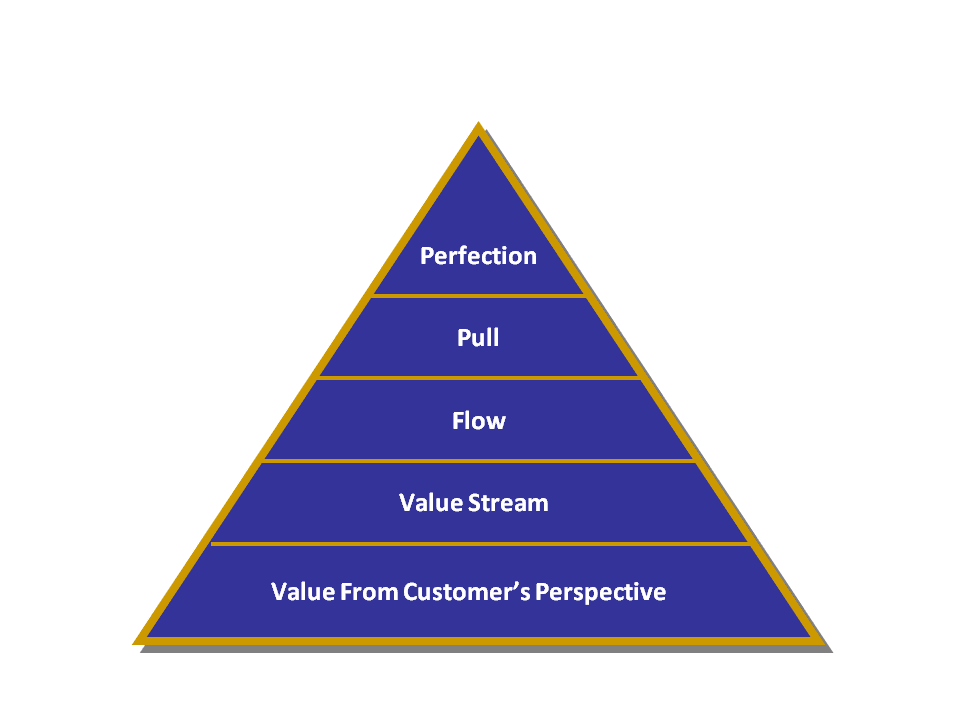
Making change is hard, but there are some models whose purpose it is to provide markers that shows the way. These different road-maps take us to different destinations depending upon which journey we are on. The criteria are specific, but easy to follow based on your current state.
PRODUCTIVITY IMPROVEMENT
Here we have our old friend DMAIC (Design-Measure-Analyze-Improve-Control) that is the umbrella for quality improvements based on statistical analysis tools developed in the '30s through the 1970s. The model helps us to Define the problem, Measure how well the process is performing, Analyze for the root cause(s), Implement methods and practices to overcome the root cause(s), and finally Control our ability to backslide to the old and comfortable ways no matter how chaotic they are.
Here we have our old friend DMAIC (Design-Measure-Analyze-Improve-Control) that is the umbrella for quality improvements based on statistical analysis tools developed in the '30s through the 1970s. The model helps us to Define the problem, Measure how well the process is performing, Analyze for the root cause(s), Implement methods and practices to overcome the root cause(s), and finally Control our ability to backslide to the old and comfortable ways no matter how chaotic they are.
PROCESS DESIGN
If you are executing in the DMAIC model and one of the root causes is "we do not have a process", or you have been tasked to figure out how to do this new thing, then you may have found an opportunity to design a new process using DMADV (Design-Measure-Analyze-Design-Verify). This should not be two dude's "Excellent Adventure" where you mess up until the boss finally accepts your new process because she is tired of your rock coloring game. If y=f(x), then you need to figure out the important x's, or stated another way, stop guessing what color she wants for the rock.
First find out who are the customers and what do they want about the product you are designing your process around, this is also called Voice of the Customer. Do you have a large audience of customers? Perhaps a well constructed survey would be best. How about commandments from your company that your process must exist within or government regulations with which you must comply? These would be the Voice of the Business.
Next, when you have collect this information, you can construct the Critical to Customer Requirements and Critical to Business Requirements. Since "Critical" means measurable, we have the basis of performance. No more needing to guess about the color of the rock she wants.
Now you can design the process that creates what is needed, how it is needed, in the amounts needed. Simple right? Probably not, especially if you think a complex solution proves just how intelligent you are. Let's go with a solution that is as simple as it can be. When designed and you have made a few rocks, do they align with the critical requirements? If the answer no, then you are not finished. Keep trying, you are almost there. When the process is working as it should, document your process, someone will be expected to execute it later.
SOFTWARE DESIGN
The Software Development Life Cycle is a specific model used in the execution of software projects. Keep in mind this is for implementing the solution that should be backed up with validated root cause analysis (remember the complexity thing earlier?). The phases are Analyze, Design, Develop, Test, and Finalize; these should seem somewhat familiar in the DMADV model.
Agile is a customer-centered methodology where all the players are gathered together, complaints and good ideas are collected, prioritized, and executed in a group environment. This is supposed to decrease the cycle time as everyone is together during the development and testing phases. Scrum is a type of Agile where the prioritized activities are worked in Sprints using improved planning techniques. This is an over-simplified explanation, but has shown to be effective when used appropriately.
WRAPPING IT UP
In the end we are trying to make our products flow better. If we can design processes with less waste and variation, then achieving Return on Investment is faster. Buy-in from our internal and external customers are important to our success in the future and our focus is still on the 4P's.
If you are executing in the DMAIC model and one of the root causes is "we do not have a process", or you have been tasked to figure out how to do this new thing, then you may have found an opportunity to design a new process using DMADV (Design-Measure-Analyze-Design-Verify). This should not be two dude's "Excellent Adventure" where you mess up until the boss finally accepts your new process because she is tired of your rock coloring game. If y=f(x), then you need to figure out the important x's, or stated another way, stop guessing what color she wants for the rock.
 |
| Our Friend the Quality Function Deployment. 3 days? Bah! |
First find out who are the customers and what do they want about the product you are designing your process around, this is also called Voice of the Customer. Do you have a large audience of customers? Perhaps a well constructed survey would be best. How about commandments from your company that your process must exist within or government regulations with which you must comply? These would be the Voice of the Business.
Next, when you have collect this information, you can construct the Critical to Customer Requirements and Critical to Business Requirements. Since "Critical" means measurable, we have the basis of performance. No more needing to guess about the color of the rock she wants.
Now you can design the process that creates what is needed, how it is needed, in the amounts needed. Simple right? Probably not, especially if you think a complex solution proves just how intelligent you are. Let's go with a solution that is as simple as it can be. When designed and you have made a few rocks, do they align with the critical requirements? If the answer no, then you are not finished. Keep trying, you are almost there. When the process is working as it should, document your process, someone will be expected to execute it later.
SOFTWARE DESIGN
The Software Development Life Cycle is a specific model used in the execution of software projects. Keep in mind this is for implementing the solution that should be backed up with validated root cause analysis (remember the complexity thing earlier?). The phases are Analyze, Design, Develop, Test, and Finalize; these should seem somewhat familiar in the DMADV model.
Agile is a customer-centered methodology where all the players are gathered together, complaints and good ideas are collected, prioritized, and executed in a group environment. This is supposed to decrease the cycle time as everyone is together during the development and testing phases. Scrum is a type of Agile where the prioritized activities are worked in Sprints using improved planning techniques. This is an over-simplified explanation, but has shown to be effective when used appropriately.
WRAPPING IT UP
In the end we are trying to make our products flow better. If we can design processes with less waste and variation, then achieving Return on Investment is faster. Buy-in from our internal and external customers are important to our success in the future and our focus is still on the 4P's.