Do you have someone on the team that has been there longer than anyone else and knows the secret path to positive results? Whether we are talking about executive or operational teams, these members have the operational knowledge that the rest of the team needs to be successful. While we cannot connect to the Matrix and download everything they know, we can do something similar that will provide growth for everyone that chooses to participate.
The greatest benefit of using mentors is the transfer of knowledge from an experienced professional to an inexperienced protégé. There may be a basic understanding of what is going on, but it is the old guys who have already made the mistakes that know the nuances of their system. This transfer can only be successful if the receiver is ready for and open to the new information.
I feel some organizations may not have mentoring due to the innovative nature of their work, and how someone “did it” 10 years ago does not matter. That is until ideas began to be built on other ideas and now the organization is forced to document everything or keep someone around that knows the old system. At some point the innovation must move into the mainstream where it can be adapted and replicated.
When I began in my first formal process improvement role, I did not have a mentor and I had to feel my way around in the dark (while making lots of mistakes) until I started doing things right. When it was time to start the mass building of “belts”, I knew that to be successful, those new belts would need some help to get through the process faster. It was a workable system, but I wonder how much more those candidates would have learned if we were not holding their hands the entire time?
As you mentor others, are you directing down the path, or are you asking questions to make the protégé think about and consider the potential impact of decisions? Are they learning enough to walk the journey alone when you are no longer available? We have see the results of this condition when the charismatic leader leaves the organization and performance declines.
Each protégé is a little different and we cannot treat all of them the same. Would Anakin have turned to the dark side if Obi-Wan had not been as cryptic in his approach? Wisdom comes from practice, not from following an old man on some darn fool idealistic crusade. There should be discussion, a decision, execution, and then back to discussion. These conversations can follow a simple formula: what happened, what was supposed to happen, why did it happen, and then how do you respond to the results?
Showing posts with label Sherpas and Stuff-Knowers. Show all posts
Showing posts with label Sherpas and Stuff-Knowers. Show all posts
Friday, May 23, 2014


Monday, February 4, 2013
Lean Transformation: Top Down or Bottom Up?
When we have Command & Control and grass roots effort, what do we do with the frozen middle?
I have talked quite a bit about the roles of Leadership, Facilitators, and Team Members. These are important people that are Setting the Vision & Direction, Leading Teams to Improve Processes, and Providing Expertise in their Job Functions. But what do we do with the managers between the top and bottom of the organization? These people are the hard-chargers who were good fire-fighters that were needed at the time based on how we performed work under the batch and queue system of production.
 These people now own processes, are measured to achieve results (maybe?), and are supposed to be growing the next generation of Leaders that will be replacing them in the next few years. If you want the improvements to stick, they have to be involved in the change. This level of the organization is where most of the Project Sponsors will reside. Increasing the flow in their processes will improve their measures and provide them the opportunity to think beyond the fire of the moment. Once you are on the Journey there will be less need to break out the old fire-fighting helmet.
This is where strategic tools like Lean Policy Deployment, Value Stream Mapping, and PICK Charts come into play. These prioritization decisions are owned and controlled by the Process Owners. It's not as exciting as putting on the Cape and Cowl, but it creates the condition where stability and balance can flourish. Overcoming the daily fire drills can positively contribute to reduced levels of stress and decreased burn-out. Remember what Dr. Tyrell said, "The light that burns twice as bright burns for half as long."
Once it is determined which improvement is first and what resources will support the transformation the Project Sponsor will help to draft a charter with the Facilitator. The charter provides the reason the team exists as it defines the Problem Statement, Goal, Scope (In and Out), Business Case, Resources, and Milestone Review Schedule. If you are trying to use Lean Six Sigma to implement your "good ideas", you will be very disappointed. The Good Idea Fairy is the ultimate business trickster and will lead you to the point where you are completely disappointed and will resist anything that remotely sounds like Lean and/or Six Sigma.

Our transformation model is simple enough to understand, but is not for the weak-willed. You must have stamina to make it through the steps, and you will find that you spend a good portion of your time "Making Value Flow". But this is exactly where you involve your Facilitators and Smart People to make the good change happen. On the other side you will have a stronger and smarter team.
I have talked quite a bit about the roles of Leadership, Facilitators, and Team Members. These are important people that are Setting the Vision & Direction, Leading Teams to Improve Processes, and Providing Expertise in their Job Functions. But what do we do with the managers between the top and bottom of the organization? These people are the hard-chargers who were good fire-fighters that were needed at the time based on how we performed work under the batch and queue system of production.
This is where strategic tools like Lean Policy Deployment, Value Stream Mapping, and PICK Charts come into play. These prioritization decisions are owned and controlled by the Process Owners. It's not as exciting as putting on the Cape and Cowl, but it creates the condition where stability and balance can flourish. Overcoming the daily fire drills can positively contribute to reduced levels of stress and decreased burn-out. Remember what Dr. Tyrell said, "The light that burns twice as bright burns for half as long."
Once it is determined which improvement is first and what resources will support the transformation the Project Sponsor will help to draft a charter with the Facilitator. The charter provides the reason the team exists as it defines the Problem Statement, Goal, Scope (In and Out), Business Case, Resources, and Milestone Review Schedule. If you are trying to use Lean Six Sigma to implement your "good ideas", you will be very disappointed. The Good Idea Fairy is the ultimate business trickster and will lead you to the point where you are completely disappointed and will resist anything that remotely sounds like Lean and/or Six Sigma.
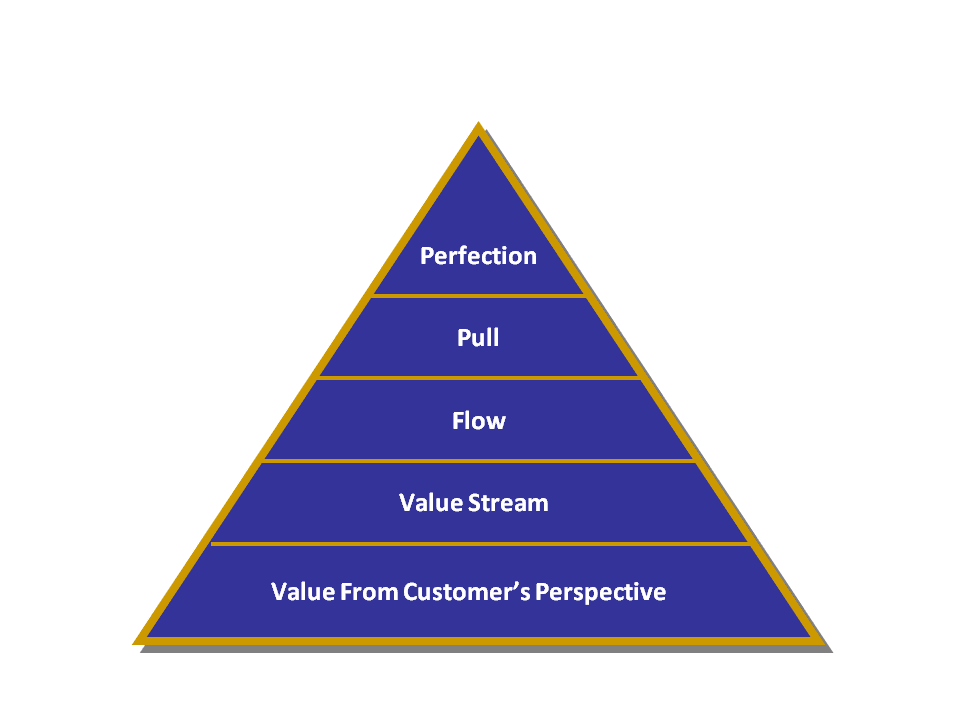
Our transformation model is simple enough to understand, but is not for the weak-willed. You must have stamina to make it through the steps, and you will find that you spend a good portion of your time "Making Value Flow". But this is exactly where you involve your Facilitators and Smart People to make the good change happen. On the other side you will have a stronger and smarter team.
Monday, November 12, 2012
Incentivizing Improved Performance
Have a team that produced great results when their past performance was consistently less than stellar? Was this a one-time bump or will there be long-lasting results? Do you think the team will show high performing metrics next review? You probably know the answer to this.
Companies and their internal organization should have plans to improve or innovate their products and services. Those plans need to be developed with and approved by the Board, flowed down through the Leadership Team, and marketed to the employees. These plans should be visual, achievable and relevant enough so that anyone we ask will understand what right looks like. We are asking for everyone's support as if the future of the company depends on it, because it does.
We know this is a journey and we should be plotting our course, stop once in a while and take a look at the progress you have made. Bring the team together and show them that working together to a common goal can make happen. Along the way, take pictures, shoot some video, interview people involved in the change, and use your project documentation to create storyboards to help show the transformation. Remember this is not small step change on one little project, but transformation across an entire site.

Think about how to reward the teams for this amount of change. A pay increase would be great, but we're talking about real employee appreciation not short-term impacts that are quickly accepted as the normal condition. Employees today are looking to make a personal connection that can act as compound interest on their careers. They also want to know that their contributions are making a difference.
Companies in the recent past paid some percentage of the savings. This is nice too, but too often the savings are soft or cost avoidance types of savings. While these opportunities need to be implemented also, they increase capacity of the team and have the affect of reducing over-time to achieve better balance between life and work. We have seen this types of reward systems become abused and leaves a bitter taste with the Leadership team when reductions to bottom line costs are not realized.
This type of thinking can certainly be used to motivate employees to continue improving and innovating, and employees knowing their efforts are appreciated make huge steps in retaining them. Green Belt or Black Belt shirts with company logos are nice, but mentoring from the boss and opportunities to move up the ladder reinforce the confidence in the actual people doing the actual work.
What type of actions have you used to show employee appreciation?
We know this is a journey and we should be plotting our course, stop once in a while and take a look at the progress you have made. Bring the team together and show them that working together to a common goal can make happen. Along the way, take pictures, shoot some video, interview people involved in the change, and use your project documentation to create storyboards to help show the transformation. Remember this is not small step change on one little project, but transformation across an entire site.

Think about how to reward the teams for this amount of change. A pay increase would be great, but we're talking about real employee appreciation not short-term impacts that are quickly accepted as the normal condition. Employees today are looking to make a personal connection that can act as compound interest on their careers. They also want to know that their contributions are making a difference.
Companies in the recent past paid some percentage of the savings. This is nice too, but too often the savings are soft or cost avoidance types of savings. While these opportunities need to be implemented also, they increase capacity of the team and have the affect of reducing over-time to achieve better balance between life and work. We have seen this types of reward systems become abused and leaves a bitter taste with the Leadership team when reductions to bottom line costs are not realized.
This type of thinking can certainly be used to motivate employees to continue improving and innovating, and employees knowing their efforts are appreciated make huge steps in retaining them. Green Belt or Black Belt shirts with company logos are nice, but mentoring from the boss and opportunities to move up the ladder reinforce the confidence in the actual people doing the actual work.
What type of actions have you used to show employee appreciation?
Monday, October 1, 2012
Teaching With Simulations
One of the joys of being the Lean Guy in the office is I get to share my knowledge and experience with other people writing contract documentation, purchasing orders, engineering changes, software code, system specs, and all the other pieces of information floating around the office. When we talk about Lean and the thing they are working on it is helpful to show an example of what right looks like. This is helpful because their product is special, and no one else processes it like they do. Special....right.
We will presume that I am not dealing with a TQM victim that is feeling frisky that day.
A tool that I keep handy is the paper flow simulation. We use index cards as the "document", technical reviewers, value-adders transforming the document, and some metrics for quality, cycle time, and throughput. This sim is cheap, easy, portable, gets the point across, and I'm not going to give away the ending, but all the team win.
Another great teaching aid is the 5S Numbers Game. I'm not sure who developed this, but it is my favorite for teaching 5S in the information flow. This link will take you to Lean Simulations' 5S Numbers Game page where you can download it and try it out for yourself.
There are other longer Lean System simulations, The Beer Game at The Lean Learning Center, and a simulation used by the U.S. Military called FedSim. These teach supply chain control, aligning tasks with requirements, and passing products through the enterprise.
Videos are great too! Terry Tate, The Bridge of Death with the Old Man from Scene 24, Dinosaur Office, Building Planes in the Air, and others help to lighten the mood and show how far into the extreme a process could go.
When thinking about sims and videos, make sure the topic fits the organization. Factory sims, stories, or videos will not work in the office. First reason is because few of the people you are talking to have ever seen a factory, much less stepped in one. Second is because factories are loaded with assets; equipment, inventory, tools, things being transformed into a product being sold to someone. And our processes have computers, printers, fax machines that no one uses anymore, binders, paper cutters, IT Helpdesks; yeah, we're special.
What kind of sims do you use in the office flow?
We will presume that I am not dealing with a TQM victim that is feeling frisky that day.
A tool that I keep handy is the paper flow simulation. We use index cards as the "document", technical reviewers, value-adders transforming the document, and some metrics for quality, cycle time, and throughput. This sim is cheap, easy, portable, gets the point across, and I'm not going to give away the ending, but all the team win.
Another great teaching aid is the 5S Numbers Game. I'm not sure who developed this, but it is my favorite for teaching 5S in the information flow. This link will take you to Lean Simulations' 5S Numbers Game page where you can download it and try it out for yourself.
 |
| My Favorite Sim in the Office! |
Videos are great too! Terry Tate, The Bridge of Death with the Old Man from Scene 24, Dinosaur Office, Building Planes in the Air, and others help to lighten the mood and show how far into the extreme a process could go.
When thinking about sims and videos, make sure the topic fits the organization. Factory sims, stories, or videos will not work in the office. First reason is because few of the people you are talking to have ever seen a factory, much less stepped in one. Second is because factories are loaded with assets; equipment, inventory, tools, things being transformed into a product being sold to someone. And our processes have computers, printers, fax machines that no one uses anymore, binders, paper cutters, IT Helpdesks; yeah, we're special.
What kind of sims do you use in the office flow?
Monday, July 30, 2012
What Are Belts and What Do I Do With Them??
Back in the late 90's, before Lean Guy and Money Girl were on the team, you may have worked in a factory with someone who said they were a Green Belt or Black Belt. I'm sure you responded with some kind of Bruce Lee move or a Chuck Norris fact. The Belt probably mentioned the F-Test, and you giggled, or talked about your misapplication of ANOVA because your data is obviously exhibiting a Weibull distribution. You probably rolled your eyes and walked away shaking your head.
In today's environment the Belt is required to be more than a DOE expert. The type of Belts you have should drive the activities being pursued. The American Society for Quality may hold a standard for Green Belts and Black Belts, but many companies have developed their own standards for their own needs at the the amount of money they want to spend.
So what are these different Belts and what can they do for you and your operations?
Looking across the organization at external suppliers and customers are Master Black Belts or experienced Black Belts. These people work with executive leadership and management to help identify and prioritize opportunities to improve flow, cycle time, quality, customer satisfaction, or other Voice of the Customer. Their tool boxes may contain Learning to See Value Stream Maps, House of Quality or Lean Function Deployment, and have the ability to lead any team through any problem no matter where it exists in the organization. Master Black Belts also develop training, and teach and mentor Black Belts.
Black Belts are equipped to solve problems across organizations in one site. They can lead projects or 3P events that are larger in scope from a VSM, teach and mentor Green Belts, execute design of experiments, and design processes with less waste and variation. Properly motivated Black Belts may be the best choice to fill Leadership positions since they are not afraid of metrics.
Green Belts can be thought of as people in the best position to learn about the operations. They can handle small scope problems like quality defects or long cycle times on the operations. Any of the statistical tests can be executed in a well-known spreadsheet and process flows can be analyzed on the wall. High-powered statistical and simulation software is not required for Green Belts.
The Belts are simply people with the skills and knowledge to make good change. The difference is in the scope and tools. Think golf ball size scope & tools for Green Belts, beach ball size for Black Belts, and a row of beach balls for Master Black Belts.
Important message to Leadership!
Pulling the Belts into action requires Vision and Direction, two products Leaders need to have in their pockets at all times. Unless you have some sick addiction to being the best fire-fighter, you should know where you are leading the organization. This is a plan that can be monitored visually. As problems are eliminated, record them on an A3 and reward good behavior.
These important skills and knowledge are being paid for and many Belts are standing by and ready to be put in the game. Leadership's task is to have a well defined problem statement and SMART goals.
What has been your experience in getting pulled into the flow to make good change?
In today's environment the Belt is required to be more than a DOE expert. The type of Belts you have should drive the activities being pursued. The American Society for Quality may hold a standard for Green Belts and Black Belts, but many companies have developed their own standards for their own needs at the the amount of money they want to spend.
So what are these different Belts and what can they do for you and your operations?
Looking across the organization at external suppliers and customers are Master Black Belts or experienced Black Belts. These people work with executive leadership and management to help identify and prioritize opportunities to improve flow, cycle time, quality, customer satisfaction, or other Voice of the Customer. Their tool boxes may contain Learning to See Value Stream Maps, House of Quality or Lean Function Deployment, and have the ability to lead any team through any problem no matter where it exists in the organization. Master Black Belts also develop training, and teach and mentor Black Belts.
Black Belts are equipped to solve problems across organizations in one site. They can lead projects or 3P events that are larger in scope from a VSM, teach and mentor Green Belts, execute design of experiments, and design processes with less waste and variation. Properly motivated Black Belts may be the best choice to fill Leadership positions since they are not afraid of metrics.
Green Belts can be thought of as people in the best position to learn about the operations. They can handle small scope problems like quality defects or long cycle times on the operations. Any of the statistical tests can be executed in a well-known spreadsheet and process flows can be analyzed on the wall. High-powered statistical and simulation software is not required for Green Belts.
The Belts are simply people with the skills and knowledge to make good change. The difference is in the scope and tools. Think golf ball size scope & tools for Green Belts, beach ball size for Black Belts, and a row of beach balls for Master Black Belts.
Important message to Leadership!
Pulling the Belts into action requires Vision and Direction, two products Leaders need to have in their pockets at all times. Unless you have some sick addiction to being the best fire-fighter, you should know where you are leading the organization. This is a plan that can be monitored visually. As problems are eliminated, record them on an A3 and reward good behavior.
These important skills and knowledge are being paid for and many Belts are standing by and ready to be put in the game. Leadership's task is to have a well defined problem statement and SMART goals.
What has been your experience in getting pulled into the flow to make good change?
Subscribe to:
Posts (Atom)