Showing posts with label VOC. Show all posts

Tuesday, September 24, 2013

Process Entitlement

We are all entitled to something, aren't we?  How about some peace and time to think before the fire-fighting begins?  Probably not.  That is unless we have thoughtfully designed our processes to perform at a specific level.  Short cycle time, high quality, just a few people touching the product, and we do not leave the day with a backlog larger than we can emotionally handle.  How often does this happen in your operations?

Profitable and Customer Satisfying processes do not happen accidentally or magically appear just because someone has the specials letters on their resume (MBA, MBB, SSBB, CQE, PMP, ETC).  These processes also do not "just work" because the right people are in the right place at the right time (Process Heroes).  It does not matter if we are using manufacturing or business processes, we should be able to receive predictable and profitable performance no matter which well trained and qualified person is sitting in that chair at that time.

Our Process Hero Saves the Day!
When you start measuring your processes you will probably find that the performance is not what you expected and you will have that sinking sensation.  Stop and breathe, this is normal to feel some level of anxiety once you have swallowed the red pill and it will pass as soon as you start to think about how to begin analyzing for root causes and implement solutions to address those root causes. So logically, if your process just happens because you throw a contract or database at the team then you will have the performance (good or bad) that just happens by chance.  If you have your Process Heroes in place you may have decent on time delivery or quality with rework and inspection, but performance will not be predictable.

Our Process Heroes can only go for so long, and remember what Dr. Tyrell told us, "The light that burns twice as bright can only burn for half as long" (Yes!  It's that important!).  When we burn out our Process Heroes we have to rely on people to inspect quality into our products, and Dr. Deming had something important to say about that too.

This change begins like most others, measure the results of the things going though your system.  This could be airplanes, circuit boards, decisions, grades, reports, or sales of widgets.  Are you receiving the results of your process that you are Entitled to receive?


Monday, April 29, 2013

New Learning With Costs

I have been away from the Lean blogosphere this semester and focusing on AC 626 - Cost Accounting for Managerial Decision Making.  While I have done this type of work as an Industrial Engineer, I think this class tied together some loose ends that I was not aware that were swinging in the breeze.  While I will try to not geek out on you I think this has enhanced how I look at the impact that reducing cycle time has on your operations and eventually your customer, no matter what method you choose to use.


I think in this case Work-in-Process absorbs so much time and energy (that you have to pay someone to worry about) and the fact that our complex systems are not helping us reduce the cost of operations, we "enhance" the links between our employees and our systems with further complex processes.  This has a direct effect on unit cost and, if not managed correctly, will make us run our operations into the ground.  I think we have seen this with the automobile industry.  Why do we reward poor performance with bail-outs and loans that will never be repaid?

While I do not aspire to do Lean with all the cost improvements that we can eat, the focus is still cycle time and unit cost is a reflection on doing the right things right and making the right decisions.  In future writings I will address these with deeper detail.

In the mean time let you mind be aglow with whirling, transient nodes of thought careening through a cosmic vapor of invention!

Ditto.

Monday, March 18, 2013

Data Visualization

Data should tell a story, and we want to tell that story through the PDCA, DMAIC, or DMADV models.  Below is a great way to think about making your data into a picture that is easy to comprehend presented by Matthias Shapiro.


Monday, December 17, 2012

When Is Enough, Enough?

A Long Time Ago In A Galaxy Far, Far Away...   

I was teaching the Statistical Process Control & Capability module during a Lean six sigma Green Belt class and one of the students asked, and I'm going to paraphrase, "When is enough, enough?"  I think this would be a normal question to ask while learning how to Make Value Flow.  The question came from one of my Quality friends, and I'm sure he was thinking about all the different processes he supported that needed improvement and certainly not when he could put his feet in the air and his "you-know-what" in the chair.

If you have been measuring your performance, then you should have some amount of data collected around the problem you are experiencing.  If you are having quality problems, you may have Defects Per Unit (DPU), or Defects Per Million Opportunities (DPMO).  If you are having delivery problems, you may have Cycle Time or Number of Days Early/Late.  If you are having cost problems, you may have Cost Per Unit or Weekly Printing Costs.  Either way, you need some data that represents your process.


We can see the performance is in control and the stable, but is the process meeting the customer's needs?  This is always the right question!

When we use SPC we are looking for  indicators that signify when to start asking questions about the process.  There are four that are the easiest to use and remember; 1) Any points outside of the control limits, 2) Six points consecutively going up or down, 3) Nine point consecutively above or below the center, and 4) 14 points consecutively going up and down.  Having a process that performs within these four parameters means that our process is in control and stable, which indicates the flow is predictable.

Here is your SPC warning!  Do not let any of you Quality Engineers catch you putting specification lines on your SPC chart.

What it does not tell us is are we meeting customer expectations.  This is where we take our Voice of the Customer specifications and lay them on top of a histogram of the data.  From here we can see our performance compared to customer specs of no more than 21 days (USL, LSL).

Current State

And as we can see from the fine specimen above, when our cycle times are 22-25 days we are not meeting customer expectations.  Our process is in control, but not performing to the wants and desires of the customer.  In fact it may be possible that our favorite customer is looking for a new supplier of their information needs as we speak and I think that immediate action is required.

At this point you should be constructing a charter, assigning one of your belts to lead the project, and kick-off the team.  Work your best as a Project Sponsor, Smart Person or Supplier/Customer and document the results in an A3.  When you have enough data with the new process you can see how the center and spread fit within the specifications.

If you have identified the root causes and adequately implemented a new process that has improved flow, then you are done with that process for now.  The biggest indicator is the edge of the distribution is some amount away from the specification.  For you math nerds, below is the formula and you want to get as close to 1.5 as you can.


Improved Process #1

Based on our results we can see that are delivering everything on time, and if we finish early we can hold the deliverable until the customer is ready.  Be wary of producing too much too fast.  That would make our work-in-process increase, which means the window between "doing work" and "getting paid" increases and this is detrimental to cash flow.

At the end of the day we want our products to flow without stopping though our value-added operations to meet customer demand.  Deliver too late and the customer must wait (Wait Time), but if we deliver too early the customer has to over-handle (Excess Processing) the product until they are ready to use it and this is "Inventory" they have to hold until they are paid.  If you have paid any attention over the last 5 years, this over-capitalization is one of the causes of the downfall of the American automobile industry.  Leadership is the decision-maker, but the following histogram represents one possible best fit.

Improved Process #2
Improving performance is not something that will automatically happen, learning curves are not absolute.  Market forces fluctuate and your ability to adjust with them could be one of your long-term indicators of success.

How do you use your data for improving flow?

Monday, December 3, 2012

Designing the Perfect Process

In all the work places we have been, do you remember ever asking how someone came up with this insane method to respond to a customer order?  Taking the order is easy, we receive an email from our website catalog system.  But everything else we do after that resembles a group of 5 year old Americans playing futbol (ok fine, soccer).

We would like to think the process was designed using the smartest people, using the best tools, and the most responsive and fair management techniques taught in the best MBA schools.  No such luck my friend.  Your current process was haphazardly put together using years of bad results from battling against lawyers, the least amount of communication possible, and it's certainly not documented or repeatable.  The last thing we also want is someone able to measure the process only to beat us up with the charts.


Does any of this sound familiar?

When do we start creating the new process?  The best situation would be during New Product Development or when you start to go after new customers.  Sometimes your current process does not meet the customer needs and small step improvement is not enough.

Let's start by defining a few characteristics of the perfect process and what it looks like:

1)  It has no review cycles, quality comes from the process
2)  There is no guessing
3)  There is no hunting and gathering
4)  The time from order to fulfillment is as short as possible
5)  The customer receives the order defect free and exactly when they want it

With this in mind, let's start....

You will need to collect any regulations that may impact your process or product, voice of the customer using surveys or direct interviews, and any business concerns that may exist.  We will put this on a House of Quality or Quality Function Deployment (QFD) (same thing... mostly, just don't say that to one of the Six Sigma guys).  Rate, prioritize, and score these to help determine the level of focus to be applied during the actual design of the flow.

Benchmark other organizations or companies dealing with the same type of product.  Be open and honest, those organizations getting good results will be very proud of their process and will happily show you their stuff.  There may be more information published on the internet, in trade magazines, or state/federal government survey data.

More time is used defining requirements so when it is time to document the new flow it almost creates itself.  Ok it's not that easy, you will need the smart people to help lay out the steps.  Lock everyone in a room, tape a long piece of butcher paper on the wall, break out the sharpies and sticky notes, and tell everyone to put their shoes on 'cause they're going to go do some work.

Start with the first signaling step and have the rest of the team fill out the remaining steps of the flow.  Keep a large copy of the QFD taped to the wall next to the flow so they don't forget about the customer's and other process stakeholder's needs.  Add the inputs and outputs to each step step to help the team focus on the thing going through the system.  Complete your Value Analysis and look for any of the 8-Wastes that can be eliminated before the process goes live.

When you have this completed and the team reaches consensus on the flow, put it in your SOP or Deskguide format.  Create the training to deploy the new process to the other team members who have not seen it and any new team members that come on board later.  Determine the measure points for Quality, Cost, Delivery, and any other Customer measure to finish the process.

If you have some sort of process automation, make sure you have separated the steps in the process to show which are performed by people and those performed by the computers.  Don't mix these as computers can't think critically and make decisions and people should not be creating information that no one will see.

Does the perfect process really exist?  Probably not, but can get very close.  All processes need to have learning steps so when quality or cycle time issues are identified they can be quickly eliminated from the process.  Update the Deskguide and document in an A3.

Everyone raise your right hand and repeat after me.  Go ahead, get that hand in the air.

1)  I will not accept poor quality from my external or internal suppliers.
2)  I will not pass on poor quality to my external or internal customers.

OK, put you hand down and share cool things your have seen in your processes!

Monday, November 12, 2012

Incentivizing Improved Performance

Have a team that produced great results when their past performance was consistently less than stellar?  Was this a one-time bump or will there be long-lasting results?  Do you think the team will show high performing metrics next review?  You probably know the answer to this.

Companies and their internal organization should have plans to improve or innovate their products and services.  Those plans need to be developed with and approved by the Board, flowed down through the Leadership Team, and marketed to the employees.  These plans should be visual, achievable and relevant enough so that anyone we ask will understand what right looks like.  We are asking for everyone's support as if the future of the company depends on it, because it does.

We know this is a journey and we should be plotting our course, stop once in a while and take a look at the progress you have made.  Bring the team together and show them that working together to a common goal can make happen. Along the way, take pictures, shoot some video, interview people involved in the change, and use your project documentation to create storyboards to help show the transformation.  Remember this is not small step change on one little project, but transformation across an entire site.


Think about how to reward the teams for this amount of change.  A pay increase would be great, but we're talking about real employee appreciation not short-term impacts that are quickly accepted as the normal condition.  Employees today are looking to make a personal connection that can act as compound interest on their careers.  They also want to know that their contributions are making a difference.

Companies in the recent past paid some percentage of the savings.  This is nice too, but too often the savings are soft or cost avoidance types of savings.  While these opportunities need to be implemented also, they increase capacity of the team and have the affect of reducing over-time to achieve better balance between life and work.  We have seen this types of reward systems become abused and leaves a bitter taste with the Leadership team when reductions to bottom line costs are not realized.

This type of thinking can certainly be used to motivate employees to continue improving and innovating, and employees knowing their efforts are appreciated make huge steps in retaining them.  Green Belt or Black Belt shirts with company logos are nice, but mentoring from the boss and opportunities to move up the ladder reinforce the confidence in the actual people doing the actual work.

What type of actions have you used to show employee appreciation?

Tuesday, October 16, 2012

Bi-Polar Working Environment

Looking back on it, the highs were high and the lows were low.  Does work seem like an endless roller coaster?  Do you run from one fire to another, double-booked status meetings, or was that another failed review with the originator pulling out of the parking lot for the weekend?  You think you get off the ride at the end of the day when you leave the gate, or is that just the part of the ride that is not doing loops?

What is in your mind when hear "a steady flow of work"?  A gently flowing stream that pops with trout hitting the surface and the water is bubbling through the rocks?  No, that is supposed to be a vacation.  Did I just hear someone's cell phone buzz while we are fly-fishing?


How many of us walk in to the build and put on our fire fighting gear?  Go ahead and put your hands down, I'm not taking a survey.  Our never taking off the gear is an indication that we do not have a workflow control system.  Everything is hot and/or late.

Getting out this mode of operation requires everyone on the team, including the coach, is making a conscience decision to stop treating everything as a fire.  And we have to start learning from our mistakes.  The solutions that support the learning must also be appropriately applied.  Anchoring the entire organization because of ethical or technical issues does not help foster trust between management and employees.

Operational Excellence is about the journey, not the destination.  We learn and grow while building trust through relationships.  You may not see it at first, but when you realize the roller coaster is no longer running you can see organizations are made up of people, not systems and tasks.

Monday, October 8, 2012

I Smell Soap!

How many times have we heard the warnings?
"Our biggest customer is coming (or the boss, or some shareholders, or OSHA) and we need to clean this place up!"

So we have two days to "clean this place up!"  Lucky for us we have a few well trained firefighters that can work and hide stacks of files, miscellaneous inventory, and review those customer reports so we can ship them out early tomorrow morning.  Everything else comes to a screeching halt.  Did I just hear one of the supervisors whisper that this looks like a 5S Blitz?

The big day arrives, everyone looks busy, the boss looks at the Ops Manager and says, "I smell soap!"

Or...

The big day arrives, everyone is busy, catching up on two days of downtime, when our favorite customer arrives.  "All of your office areas smell so clean!"  

She is getting the 5-Star treatment.  Walking through the areas, seeing a white board with tracking numbers next to the reports they ordered with status of "Delivered" next to them.  The Office's Operations Manager is smiling, and gives the customer a box of branded office swag, cups, banner pens, and flash drives, on her way out the door.

LOVE the banner pens!!


For those of you who honestly think this is what a rapid 5S Event looks like or that 5S is Housekeeping, I have a little secret for you.  You are wrong, not mistaken, and those who told you that were wrong.  For the rest of us this is turns into an effort in futility and the clutter will return in about two weeks.

There is a way to avoid all the dramatics, and fire-fighting.  The site has to become organized.  This is not something that a small group can accomplish, it's going to take everyone from the employees all the way up to the Leadership team.

5S is a system of organization that helps us answer the following questions:
Sort - Do we need everything we have?
Set in Order - Do we have everything we need?
Shine - Can we see abnormalities?
Standardize - Can anyone do this repeatedly?
Sustain - Are we maintaining or backsliding?

Each "S" is built on the previous, and it starts by Sorting to remove the fog of clutter.  If you see half eaten bags of cheesy poofs laying around, listen to the voices in your head and throw them away.  When we Set in Order we are removing searching waste.  We are no long a hunting and gathering society, work should be the same.  The work of Sorting and Setting in Order is executed by the smart people.  The actual people doing the actual work knows what is needed or not needed.  The boss can come participate, but only as a set of hands doing work.

When we Shine we are keeping our machines (printers, computers, network drives, etc) in a like new condition so we can see a small problem before it becomes a much larger problem.  How often does the printer go down because you ran out of paper in the office or because little hang-ups turned into an issue where we have to call the guy who sold us the printer four months ago?

When we Standardize we are documenting how we do things.  Is there a standard method to creating folders on the servers for new projects?  How about projects that are complete or abandoned?  How long does it take someone to find the information they are looking for?

Sustaining the gains involves Leadership being active in the change process and I don't mean they only move their furniture around.  Take a waste walk, go to the gemba!  That is the actual place where the actual people are doing the actual work.  Does the work flow?

One of these days the customer, or the boss, or OSHA is going to stop by unannounced...

Don't just shake your head up and down, share what you have seen in the comment box.

Monday, October 1, 2012

Teaching With Simulations

One of the joys of being the Lean Guy in the office is I get to share my knowledge and experience with other people writing contract documentation, purchasing orders, engineering changes, software code, system specs, and all the other pieces of information floating around the office.  When we talk about Lean and the thing they are working on it is helpful to show an example of what right looks like.  This is helpful because their product is special, and no one else processes it like they do.  Special....right.

We will presume that I am not dealing with a TQM victim that is feeling frisky that day.

A tool that I keep handy is the paper flow simulation.  We use index cards as the "document", technical reviewers, value-adders transforming the document, and some metrics for quality, cycle time, and throughput.  This sim is cheap, easy, portable, gets the point across, and I'm not going to give away the ending, but all the team win.

Another great teaching aid is the 5S Numbers Game.  I'm not sure who developed this, but it is my favorite for teaching 5S in the information flow.  This link will take you to Lean Simulations' 5S Numbers Game page where you can download it and try it out for yourself.

My Favorite Sim in the Office!
There are other longer Lean System simulations, The Beer Game at The Lean Learning Center, and a  simulation used by the U.S. Military called FedSim.  These teach supply chain control, aligning tasks with requirements, and passing products through the enterprise.

Videos are great too!  Terry Tate, The Bridge of Death with the Old Man from Scene 24, Dinosaur Office, Building Planes in the Air, and others help to lighten the mood and show how far into the extreme a process could go.


When thinking about sims and videos, make sure the topic fits the organization.  Factory sims, stories, or videos will not work in the office.  First reason is because few of the people you are talking to have ever seen a factory, much less stepped in one.  Second is because factories are loaded with assets; equipment, inventory, tools, things being transformed into a product being sold to someone.  And our processes have computers, printers, fax machines that no one uses anymore, binders, paper cutters, IT Helpdesks; yeah, we're special.

What kind of sims do you use in the office flow?

Monday, September 24, 2012

Can Lean and Corporate Governance Play Together?

We’re going to go deep behind Executive Lines this week so don’t get left behind.  There is quite a bit of regulation out there telling companies how to act, walk, talk, eat, etc, etc, and if you want to raise some capital by selling shares of you company on the market you will have much more to deal with.  I will not be providing any opinions on the Sarbanes-Oxley Act, but over the last 30 years Corporate Governance has received plenty of attention especially after Enron, Worldcom, and other situations.

What is corporate governance?

Let’s start with a definition on Corporate Governance.  Simply, it is the system by which companies are directed and controlled, (Wikipedia, SEP 2012).   It attempts to define the interactions between Board of Director members, management, and shareholders.   You could add stakeholders to this list also based on the amount of airplay companies receive.  But let’s focus on the basic definition words “system”, and “directed and controlled”.

Much of this addresses the communication path through management, the board, and shareholders.  We can see this in the shareholder reports, and on financial websites with the company’s balance sheet, income statement, and statement of cash flow.  Inside the company the communication the board and management uses should be  a little more action oriented.  When I say communication, I mean the metrics.

How good is the company’s delivery? 
Oh, it’s good. 
How good? 
Real good.

Sound familiar in the office area?  Does anyone really know?  When the strategic plan is built, there should be some recognition of measurable performance goals.  If you don’t know, go ask your customer what is important about the delivery of your product.  Oh, it needs to be good.  How good?  Real good.

What is a Lean System?

Let’s go back to this system.  When we talk about a Lean System, we are talking about making our office products at the rate or pull of customer demand.  Do we have this thinking in our systems?  Yes, that does mean to put Just-In-Time methods in our order systems.  Remember, JIT is not just about reducing inventory costs, it puts a glaring spotlight on the problem areas.  The same areas where we improve the flow of our information products.

Align the Lean System with the Strategic plan and we begin to provide actionable metrics going to the board and management, and in the right hands of a visionary Leader this can produce transformation that strengthens the company and produces happy customer.  How happy?  Real happy!

The measures going to management should show how we are affecting the results.  These could show that performance is better, worse, or remained the same.  If the results have not changed, then the team has not found the root causes, or the improvements are not working and we will hold off the pizza party until we have sustained positive results.

Can we institutionalize continuous improvement?

Improvement can be institutionalized by creating the expectation, and required metrics to review, and growing the people who show aptitude for Leadership out of the ranks of Green Belts and Black belts.  I did not say that all Leaders should be belts, but there is a good place to look.  Leaders should have their performance measured and Executives do not have a “come-apart” the first time a chart is Red or Yellow.  These are indicators of process performance issues that need to be addressed.

ISO and CMMI provide frameworks of systems, but these are dependent on people working within the boundaries and keeping the documentation current.  Companies and teams still develop their own methods and processes and these should be measured and reported upon.  If you are not going to manage the process, then don’t measure it.  And don’t be surprised if you do not receive the performance you think that you are entitled to receive.

As we go through this journey, we should be using road signs and maps to help us see where we are.  Working with Leadership and our employees will strengthen the relationships and improve morale.  Doing the right things at the right time should result in satisfied customers.

Have you seen a successful transition of practices when Leadership has changed hands?

Monday, September 3, 2012

Lean Policy Deployment

Aligning tactics to strategy

Welcome to September!  Guess what it is time for now?  That's right, this year's goals and objectives for the company.  How are we doing this year so far?  Did you set sales, safety, delivery, or financial goals?  Did you build that new capability you wanted?  Are your teams progressing in maturity?

These are worthy and usual safe things to chase, but are they the right things for your company or teams?  You will also find that you may have a team or site that is the benchmark for the company.  Translating your vision into the strategy is up to you and your board of directors, and determining how to advance to that vision will be executed by management and the teams.  Each team member is aware of their strengths and weaknesses, and this tool can help them grow into that type of person they want to be.


How to build
  1. Identify the key issues in the organization's customer focused performance.  These may come from a Value Stream Mapping Event or a strategic offsite meeting.
  2. Determine measurable business objectives that address these performance issues.  You are not boiling the ocean, and they do not say "do stuff better".  A good tool to use here would be a Balanced Scorecard.
  3. Define or Refine the overall vision and goals.  Goals will be listed under Target Operational Results.
  4. Develop supporting strategies for pursuing the goals.  These will be listed next to the Objectives.
  5. Determine the tactics (or projects) and targets that facilitate each strategy.  List tactics above Selected Projects and targets next to Improvement Targets.  
  6. Decide the strength of alignment within the matrixed entries on the map.
  7. Implement performance measures for every business process.  If it is worth doing, it is worth measuring and doing right.  Yes measuring is hard, but so is laying people off because you did not work on the things that were important.
  8. Measure business processes during execution.  Do not wait until the end of the year to see if you hit any targets.

How to measure

And now we are off and running!  We are delivering sales orders, reports, and briefings.  The team is collecting data and we are compiling it into something that tells the real story.  Whether we are using a fully automated workflow tool with performance reporting, or collecting information on a form and typing it in a spreadsheet, we need to make sure we share it with the team.

Don't try to create excuses if the information is not great, we are smart enough to see through management's smoke screens.  This is the perfect opportunity to use some A3 Problem Solving.  Use the results to strengthen your system and processes, and celebrate your successes once in a while.


What results have you seen with your improvement planning?

Monday, August 27, 2012

Lean Flow and Employee Involvement


There is no shortcut or back road to Lean transformation, it's not a journey you make on your own change, and it's not a top-down only effort.  But you have some busy people that can help you navigate in the dark, they are your employees.  How many of us remember when work arguments were won based on volume and creative profanity instead of the facts and data of the situation? The yelling may have diminished, but I'm not sure we are all in for using facts and data.

We do know that it is rough out there, but this is not the time to hide in the office and wait for the dust to settle.  Now is the time to look at how we do things to better meet customer needs and expectations.  We know that Lean is based on the Toyota Production System and part of the foundation is "Respect for People".  Everywhere I have worked, Leadership says that "People are our most important asset".  Does anyone know what that really means?

Lean Transformation Model
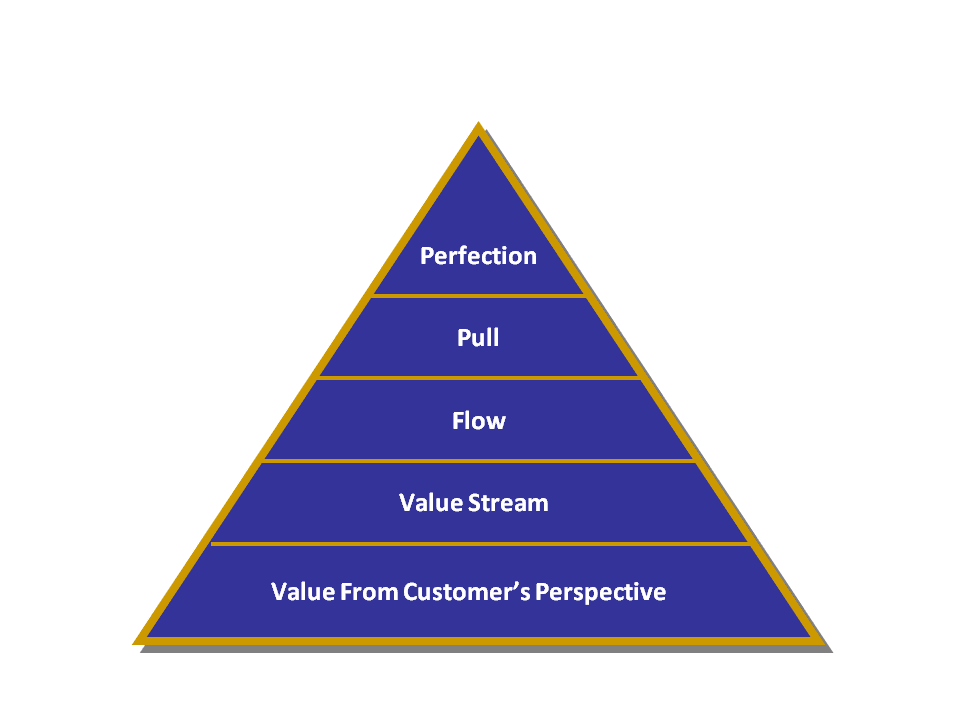
As you notice from the model we start with choosing one of our products and ask the team what they think their customers would say about that product.  We need to go talk with the customer also, but this gives us a starting point.  Share this information with the team, it may shock or surprise them (or confirm what they know) but the truth will be there out in the open.  Think about how these truths align with the 4P's.

When we map and measure the processes that support a product we are using the team not only to uncover the hidden processes we use, but so we all have a common understanding how we construct that product.  There will be human interactions the team may not have experienced before and you need to be ready to lead them through the various situations.  Make sure you attempt to includes everyone's voice.  Even your hard working introverts that are not sitting at the table (there they are along the wall) have something to say.

If you have adequately defined the flow problem and identified the most likely direct root causes, ask your team members for their suggestions to overcome the causes.  Some of the team may have been through that type of problem and could have the answer.  Try the solutions before any wide-scale implementation to uncover any constraints you may not have anticipated.  One person on the team, or the boss, will not have all of the answer that is needed, but each person may have a piece of the answer and it is up to you to create the picture of the new process.

Once you have the solution implemented, track the performance and share the results with the team.  This should be displayed on a board in a common area and where you hold team meetings.  You may even be able to connect that information with customer surveys or financial analysis.  Share the before and after data with the team to show them their efforts are making a difference.

What has been your experience working with teams or being on a team that improved one of your processes?

Monday, August 6, 2012

Poke-Yoke the Engineers

Being an engineer and forced into a box did not "feel" right.  How am I supposed to use my technical creativity to take these requirements and turn them into something you can hold in your hand?  Get away from me with your process stuff, I'm here to (hold up your shield) support the customer!!

I acted this way for a time while adjusting from being a recent college graduate to a responsible and productive member of society.  I had my office, with three computers, bookshelves full of component specs and design books, and my attitude of "THESE HANDS WERE TOUCHED BY GOD!!".  Obviously those people don't understand my brilliance and I must dumb-down my methods to meet their level of intelligence.  Now, if I could automate the human out of the equation quality and productivity would instantly improve.

Wow!! Was I really that full of myself?  I don't think I was very helpful during that time in my career.  I had just left Uncle Sam's Misguided Children two years before and graduated with my Manufacturing Engineering degree a few months prior. I had a few career successes and my level of confidence in my abilities were over-the-top.  I had lost my touch with reality and the work relationships suffered.

It only took a project or two to learn that my work produced a product that was needed for another team on the floor and their success (read as OUR success) was based on how well I performed, not just technically but to their schedule. I learned there was enough variation in my output to disrupt everything on the floor when I worked in my own smoke-stake or rice bowl.

We started by paying attention to the feedback coming from the floor.  How often were they coming back for us to fix something, how much time was spent during changeover, and how often did we deliver our products late to their need?  Simple, but powerful measures to gauge performance.  When we analyzed the data coming from the floor, we found the enemy and he was us.

Continuous Learning Cycle
Our first move was to document changes being made on the fly and changes being made at our desks.  Most of the changes had been made on the floor, which hid most of the problems and the information showed us how bad our product was.  A picture began to form showing what exactly who the culprits were and they were quickly standardized through our purchasing department.

Next we checked all our computers to ensure we were all connected to the right data sources.  Some had "drifted" off course and was quickly realigned to master libraries.  We saw a vast quality improvement after the last of the "bad" product had gone through the system.  It looked like the worst was behind us, but in reality we were still in a fragile state.  We still needed to update our standard desk guides.

When we stabilized our output, we began to chance variation in the inputs.  The design engineers had their design software connected to standard data sources linked to our MRP system.  We tracked our requests to them to fix their problems, shared that data in a professional manner, and saw results.  We found problems in the MRP system also and many times the reason was they did not think that option mattered to anyone.

It is great to feel like the hero that saves the day, but after a while we get tired of the same old problems.  It looks like no one cares when things do not improve on their own.  We live in the information age, and when there are problems with the information flow we have to address those to closure.

What has been your experience working in the data flow?  Have you seen improvements over the last few years?

Monday, July 9, 2012

What Are the Right Measures to Use In the Office

It's Friday afternoon and it's quiet, almost too quiet.  Your phone rings and it's the boss telling you to come to her office, now.

What is it now?  I'm almost done with my TPS report and I have big plans this weekend!

You find your pen and something to write on, and head to her office.  It's like this every last Friday of the month, a panic discussion about the end of the month metrics.

We're overrunning our IT and overhead budgets, what sales orders can be closed before the end of the month, and which suppliers we put off paying for another 30 days?

It's the same panic-attack every month, and the last branch chief was worse.  We should be able to predict these things instead of going through all this drama.  Some way of looking each week to see how we are doing. But we don't work on a manufacturing floor, we push paper around the office, we are completely different.

Wow, I think we have seen this situation play out more than once.  The key here is not only figuring out how to avoid the panic attack, but to be able to predict how the month will end with plenty of time to respond.  This journey certain starts with recognizing who the customer is and what do they want.  If the thing we are working on goes to a customer whether inside or outside, we will use the Voice of the Customer (VOC) to develop our metrics.  If there are corporate or team objectives we reaching for, we will use Voice of the Business (VOB) to develop the metrics.

The VOC conversation starts with something like "what are the things about my product that need to be perfect?".  The "things" may focus on delivery, quality, cost, performance characteristics, or any other "thing" that may be on the customer's mind at that moment.  You will need to guide the conversation based on some feedback you may have or you will spend weeks in the weeds chasing rabbits. These conversations will help improve the relationships with your paying customers and provide a creative outlet for the team to work toward instead of the day-by-day painting of rocks trying to find the color the customer wants.

The VOB conversation is based on those corporate objectives that come down at the beginning of the year, newly created government regulations, or corporate governance policies.  The boss is giving you signals that you probably should not ignore and some exploration of details of how to execute policies can provide insight on how to measure the execution.

Take this information back to the team and explore their input on what those measures are and how that data is collected.  Do you have systems that you work within that collect time and date stamps, who is contributing to or approving steps in the work flow, track travel budget or sales totals?  These may be sources of data needed to create the metrics that can show if the team is on track or not.  It may take a little time to create a baseline, but you will soon be on your way to avert being blind-sided.

When you have the metrics created, don't just hide them on the corporate share-point servers.  Share them with the team, talk about the performance and maybe some root causes if the performance is not where it should be.  Teach the team how to talk about performance improvement and don't use a bunch of Japanese or Six Sigma words to show everyone how enlightened you are.  This is not a finger-pointing session.


In the mid-90's I worked for a telecommunication company in prototype manufacturing, building typical quantities from 1 to 10 with the median quantity being 2 or 3.  Our model was Low Volume/High Mix and we were in the change-over business.  The boss kicked-off one of our weekly staff meetings with the question, "Where is the waste in our processes?".  This was an odd question, and instead of someone asking what he meant by "waste", the two main factions began to attack each other.  The meeting did not end well, but it did start me thinking about how we transform information and material into circuit boards.

We had business goals (VOB), build prototype work orders in 3 days and pilot production work orders in 7 days.  This was easy to think about in manufacturing, but I was leading the machine programmers, we were creating software programs and reports.  In reality we had about 2 hours to complete our work that fed into the next steps of the process that eventually provided engineering with test results to a final customer that was buying our stuff.

Ultimately we had to show that we were helping to improve our processes and we did this through the use of metrics over time.  Metrics that were reviewed on a weekly basis with the actual team doing the actual work.  When we were aware of a problem, we would convene on that problem, talk about root causes, determine what to do about it, and update the deskguide we used for how we performed the work.  And all this was tracked in our metrics based on the reports we were producing.

As you begin looking at what you do and what metrics are relevant, what you finally decide to use may be very different compared to what you started with.  This is part of the journey, finding the right roads to take you where you are going.  And if you want something quick and dirty to start with, three popular measures are On-time Delivery, Percent Complete Delivered, and Quality Yield. Remain positive with the team, some emotions will rise up and remind everyone that we are in this together.